Sathya, Welikada prisoner, who never found the truth.
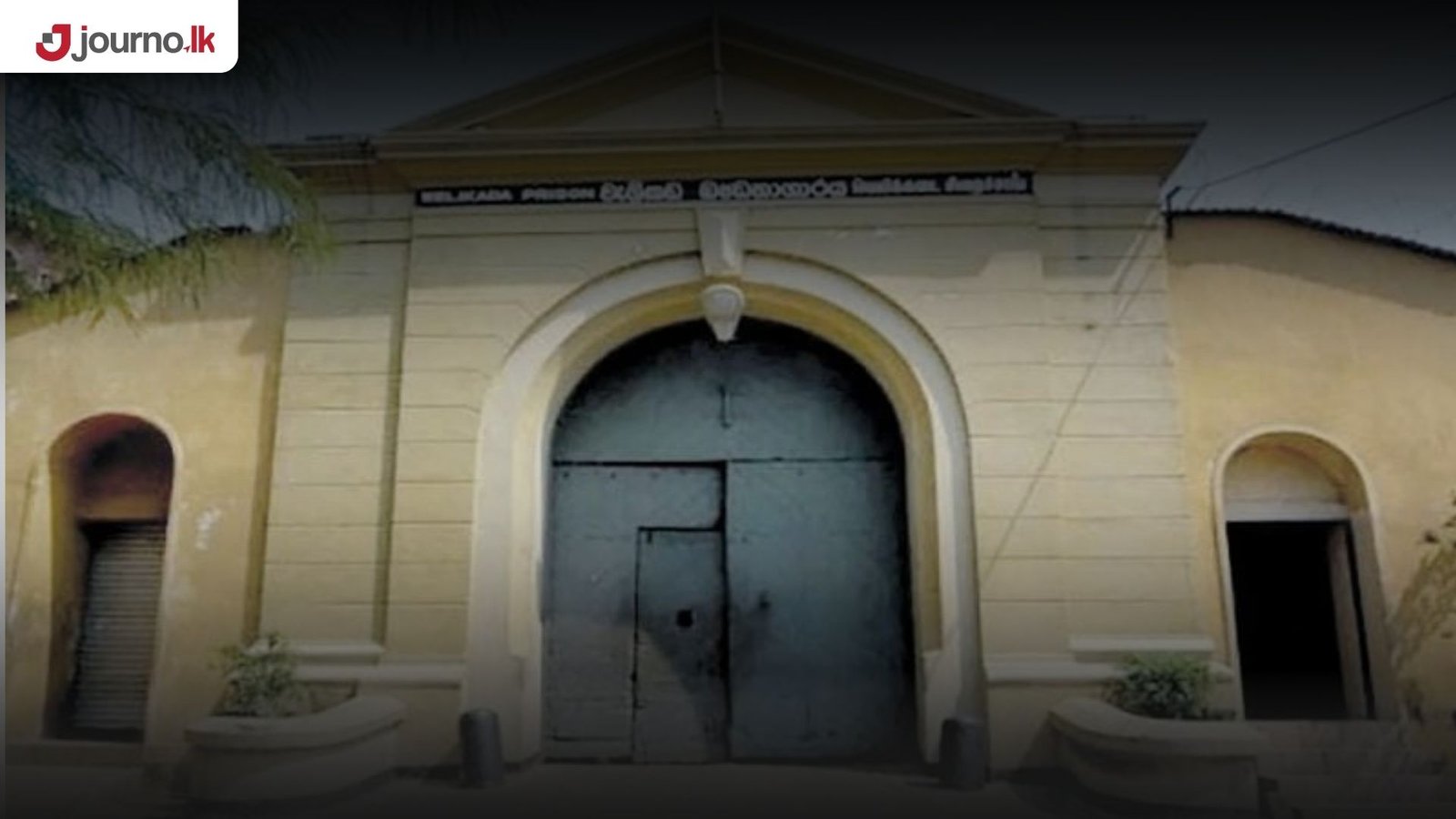
Sathya, whose fate was tied to the gallows for a crime he had committed unknowingly, dreamed for over three decades of waking up at dawn, walking under the shade of palmyra trees, and enjoying the morning warmth. At dusk, Sathya, confined to four walls, would rest on a mat, lost in an ocean of thoughts about the day he could make that dream a reality. Yet, even as those dreams took root deep in his heart, all Sathya ever saw was darkness. Sathya, who had sought the truth through the darkness, sank into a six-foot hole in the ground a few days ago, never to see the light.
According to his birth certificate, Sathya’s real name was Jayaseelan Sathyanadan. He was from Mannar, on the north-western coast of the island. Sathya, who was born as the eldest son in a family of four children, saw his family suffer immensely at the hands of the LTTE. The terrorists turned the villages of Sathya and his people upside down. Sathya’s father, a dried fish merchant, sought safety for his wife and children, sending them to Tamil Nadu, India. However, his father could not accompany them, as he could not abandon his livelihood halfway.
Sathya, who had gone to Tamil Nadu with his mother, suddenly had to return to his homeland. This was due to news he received that his father had fallen ill. Knowing that Sathya was travelling to Sri Lanka, a man in Tamil Nadu asked him for a favour. He asked him to take a parcel to Sri Lanka and hand it over to a female friend of his, adding that the friend would come to Katunayake Airport to collect the parcel. Sathya, who was a young lad at the time, had no reason not to do this favour. Taking the parcel, he arrived in Sri Lanka on 25 May 1994, hoping to see his father. However, the woman who was supposed to come and collect the parcel did not arrive at the airport. Sathya waited for her to arrive, but instead of her, it was the police who came looking for him.
Sathya only learned that the parcel he was carrying contained narcotics when the police told him, or so he had stated. Sathya was caught in a death trap. The police arrested Sathya, who was barely 22 years old at the time. Even though he maintained that he did not know what was in the parcel, the police did not care. No matter how much he pleaded, it was to no avail.
Whether what Sathya said was true or false, the police could not let him go, as that was the law. The parcel Sathya had carried contained 23 grams of narcotics. Even if it was done unknowingly, Sathya had to face the punishment for the crime. The journey he had taken to see his father ended with the police. Sathya, who was taken from the police to the court, was sentenced to the gallows on 27 September 1996. This is how Sathya, who came to see his father, became imprisoned in Welikada Prison.
Retired Major Ajith Prasanna, who shared prison meals with him, told us Sathya’s story. A lawyer, Ajith was sentenced to three and a half years on charges of contempt of court and he met Sathya during his time at Welikada Prison.
When Sathya met Major Ajith, a new hope began to sprout and grow in his heart. With every passing second in prison, he dreamed even more about the day when his desired dream would come true. That was because Ajith Prasanna had made him a promise.
‘Brother, I will get you released somehow… Hold on until then…!’ Ajith promised Sathya, like a brother.
Ajith Prasanna, who recently ended his prison life, came out last month and raised his voice about Sathya’s memory.
‘Although I first met Sathya at Welikada, I didn’t speak with him then. While returning after being taken for my case in Galle, I saw Sathya at the ‘location’. The location is a place where prisoners are registered, asked their name, ward, and crime, and given a written chit. Just as I worked in the tailoring ward, Sathya worked at the location. While I was working in the tailoring party, a prisoner there asked me, “Ajith, do you know that an innocent person who came from Tamil Nadu was caught at the airport because of a parcel of drugs given by someone else, and has been in prison for years?” That is when I learned about Sathya. I spoke with Sathya and got to know him’, says Retired Major Ajith Prasanna.
According to the revelations made by Retired Major Ajith Prasanna, Sathya, who entered prison in his youth, had to face numerous hardships. Even though he was sentenced to the gallows for the narcotics charge, Sathya had gone to the Court of Appeal against that verdict, seeking his freedom. He did not receive it, but the step he took was somewhat successful. Ajith Prasanna told us about that, too.
‘Sathya’s death penalty was reduced by the Court of Appeal. It was converted into life imprisonment and then limited to a prison term of 20 years. Orders were also given to send this recommendation through the Prison Superintendent to the then President, Chandrika Bandaranaike Kumaratunga. That verdict was received on 20 October 1998. However, that recommendation did not reach the President. Even when I met Sathya, he had been serving a prison sentence for more than 20 years. How tragic is that’, says Retired Major Ajith Prasanna.
Although confined to the four walls of Welikada Prison, Sathya grew up well. He committed no evil; to put it bluntly, he knew the prison duties even better than the prison officers did. He corrected novice officers when they made mistakes. His conduct was good. For that very reason, Sathya was able to receive the certificate for the best inmate from former President Mahinda Rajapaksa in 2010. Sathya showed this certificate to Retired Major Ajith Prasanna, too.
Retired Major Ajith Prasanna says that Sathya was directed to the Negombo High Court on a day in 1999 to have the given court verdict read and explained to him. On that day, it was written on Sathya’s punishment warrant that his sentence was a 20-year prison term. To monitor the behaviour of prisoners in prison, the four-year review was implemented at that time under Prison Rule 40. Sathya was also reviewed by the review board at that time. According to Ajith Prasanna, Sathya’s name was also written on the life pardon list in 2002. However, no one had any desire to mention a day when Sathya would see the world outside the prison.
Retired Major Ajith Prasanna also states that on a day in October 2007, the Assistant Secretary to the Ministry of Justice, Piyumantha Peiris, had informed the Commissioner General of Prisons, Retired Major General Vajira Wijegunawardena, in writing, claiming that the prison had neglected the recommendation made by the Court of Appeal regarding Sathya’s punishment. That, too, brought no results for Sathya.
During the time Ajith Prasanna was in prison, his wife had gathered the friends and relatives of other prisoners and formed an organization. That was the ‘Prisoners Are Human Beings Too’ organization. Once, when his wife came to inquire about his well-being, he told her the information about Sathya. That organization raised its voice for Sathya, informing President Anura Kumara Dissanayake about this through a letter. Copies of it were also sent to the Prime Minister, the Minister of Justice, Harshana Nanayakkara, and several other ministers. But what a great misfortune it is that none of this could get Sathya out through the massive gates of the prison.
Not only that, the ‘Prisoners Are Human Beings Too’ organization also held a protest in front of Fort Railway Station in December 2024. Sathya’s mother, Jayaseelan Pushpaleela, also came from Mannar for this protest on behalf of her son. We also spoke over the phone with her, who is currently 80 years old. She said that the court had limited her son Sathya’s prison sentence to 20 years. Pushpaleela had the opportunity to speak with the Commissioner General of Prisons on the day the protest was held for Sathya. Pushpaleela says that the prison officers promised that day to release Sathya in two years.
Sathya, who was the best inmate in the prison, went home last week after 32 years. But neither his mother nor his family friends had the fortune to celebrate the joy of his return home, because Sathya went home closing his eyes forever, never to open them again. Anthony Amirdanadan, the son of Sathya’s maternal aunt, told us that they were informed that Sathya, who had been ill for some time, died of a heart attack.
Sathya passed away in the early hours of the 17th. His prison companion, Retired Major Ajith Prasanna, also knew that he had been ill. However, the death of Sathya, who had so much faith in him, caused a great shock to Ajith.
‘Sathya was also in the same K Ward where I was. He had a kidney ailment. Since he needed to use the toilet, he slept right next to the toilet. There was a time when he even walked with us on a tarred road inside the prison, but little by little, he stopped walking. His stomach was swollen. As far as I know, Sathya became critical and was taken to the prison hospital after eight on Sunday night, and passed away on Monday morning. Should a patient with kidney failure be in a prison ward or a hospital? He did not receive proper treatment. He was the best prisoner, the one who performed the most duties. If he is treated like that, what about the other prisoners? When I found out that Sathya had passed away, I felt terribly sad. He was a very good man. We were like brothers inside. I promised him that I would get him released somehow, but I couldn’t fulfil the promise I made to him. Even after the prison sentence was over, Sathya suffered imprisonment for an extra ten years’, says Retired Major Ajith Prasanna very emotionally.
The Prison Department tells a very different story regarding the fate that befell Sathya. When we inquired about Sathya from the Prisons Media Spokesman, Commissioner of Prisons—Senaka Pallethanna—he said this:
‘This person has been punished in relation to 23 kilograms of heroin. He was sentenced to the gallows, and that punishment was changed to life imprisonment. To date, no one has been pardoned for heroin. Although life pardons are given for murder cases, they are not given for heroin. A life sentence is not limited to 20 years, either. I haven’t encountered such punishments during my period of service’, he stated.
Thousands of prisoners who have been rehabilitated and have been serving long prison sentences, like Sathya, are still in prisons today. Retired Major Ajith also told us about the prisoners who received the death penalty, like these people. He states that the current non-implementation of the four-year review, which reviews the behaviour of prisoners, is an injustice to them.
Although every prisoner must be sent to the review board once every four years after arriving at the prison, this has not been implemented for several years now. There, the prisoner’s behaviour, how much they regret the crime they committed, whether they have been rehabilitated, and whether they are in a condition to be reintegrated into society are examined. If it is a prisoner serving a long sentence, they are sent for review the first time and kept for another four years. Even when presented for the four-year review a subsequent time, if the prisoner’s behaviour is good, a sentence reduction is recommended. According to Retired Major Ajith, the four-year review has been stopped since 2002.
‘Today, there is no relief for those who received the death penalty or those serving life sentences. Why keep a rehabilitated person in prison until they die? It’s an injustice. Those who received the death penalty are on the bottom floor of the Welikada Chapel section. They are only taken out for 45 minutes a day. They can’t see the light. The majority of them cannot see now. If the death penalty is not being implemented, why keep them locked up like that? Those serving life sentences can work in the work sections. They can walk outside until evening. Why can’t those with the death penalty be allowed to be like that? It is very cruel’, says Retired Major Ajith.
When the Prisons Media Spokesman, Commissioner of Prisons Senaka Pallethanna, was asked about the four-year review of prisoners, he said that the four-year review is scheduled to be implemented in the near future. However, before the fortune of going home through the four-year review could dawn on Sathya, the best prisoner in the prison, death arrived first.
Last Thursday at twilight, as the setting sun was hiding behind the Mannar coast, Sathya found eternal rest in the arms of Mother Mary. Sathya, who came to see his father 32 years ago on that day, will meet his father in heaven. That is because a few years after Sathya’s fate was sealed in prison, his father also found eternal rest in the arms of Mother Mary.